
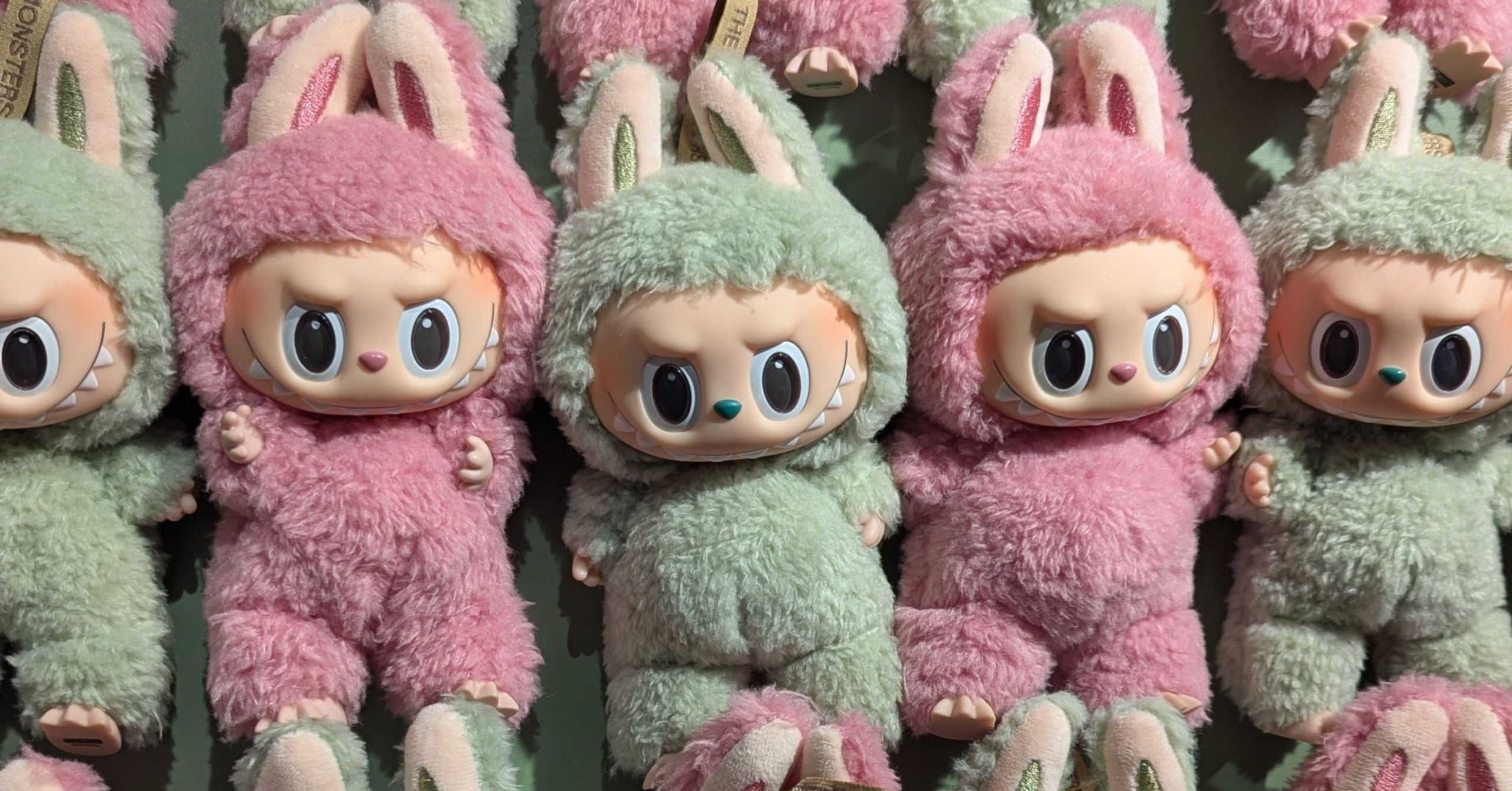
The Labubu Effect: How a Slightly Ugly Doll Became a Global Obsession
There is nothing inherently special about a small, fanged, elf-eared plastic monster on a keychain. It doesn't solve a problem. It doesn't do anything. And yet, by 2026, Pop Mart, the company behind it, has built a roughly $44 billion empire largely on the back of this one character. That gap, between how ordinary the object is and how extraordinary the obsession around it has become, is exactly where the lessons live.
A Cult Following Before It Was a Global One
Labubu wasn’t built in a marketing meeting. Pop Mart spotted the character’s commercial potential in 2019, folding it into its blind box strategy, where fans buy sealed packages without knowing which figure they’ll get, fueling anticipation, resale value, and repeat purchases. For years, this stayed a niche, cult phenomenon, mostly contained to Asia. Homegrown
Then came the moment every brand dreams about and can rarely engineer on purpose. Labubu was already a cult hit in China, but the real turning point came in April 2024 when Blackpink’s Lisa began sharing photos of her Labubu collection on Instagram, and the posts quickly went viral across Southeast Asia, pulling in a wave of K-pop fans and collectors. From there, celebrity interest helped the popularity of Labubus skyrocket further, with Rihanna and Kim Kardashian later displaying Labubu publicly too, shifting it from a niche product to something mainstream almost overnight. Homegrown + 2
By mid-2026, the numbers had become genuinely staggering. Pop Mart had transformed from a niche designer toy store into a $44 billion empire, a valuation that rivals major tech acquisitions and traditional luxury conglomerates. EnactOn
The Mechanic Underneath the Madness: Blind Boxes
The engine behind all of this is deceptively simple. Blind boxes are sealed, collectible packages where the specific item inside is a mystery until it’s opened, with each box coming from a themed series and containing one random figure from the set; some figures are common while others are rare or even “secret” editions, often with odds as low as 1 in 72, which drives collectors to buy multiple boxes hoping to complete the set or score something ultra-rare. Goodreturns
This isn’t an accident of packaging, it’s a deliberate use of psychology. The appeal of blind boxes lies in variable ratio reinforcement, a psychological reward system similar to gambling, which keeps consumers engaged and drives repeat purchases. As one marketing professor put it, “It’s a little bit like buying a lottery ticket. The uncertainty is giving another layer of enjoyment.” A gambling researcher echoed this directly: blind boxes work because you don’t know when you’ll get the reward, and when you do, it’s highly rewarding. Dailyhunt + 2
Scarcity as a Core Design Principle, Not a Side Effect
What makes Pop Mart’s strategy genuinely sophisticated isn’t just the blind box mechanic, it’s how deliberately the company engineers shortage itself. The toys are sold in “drops” that often sell out in a matter of minutes, with the team producing volumes guaranteed to sell out and create FOMO, forcing new customers to wait for future drops. A retail analyst summarized it bluntly: Pop Mart has redefined collectible toys as luxury items by deliberately engineering product shortages, turning what was once an impulse buy into an obsession, with waitlists and sold-out signs transforming Labubu from playful figurines into symbols of exclusivity. Business StandardIndian Startup News
This scarcity does double duty. It drives urgency at the point of sale, and it generates a second, unpaid wave of marketing entirely on its own. By creating intentional shortages, Pop Mart sparks organic viral loops, as millions of fans post unboxing videos, share frustrations, and build micro-communities dedicated to the “hunt” for rare figures, meaning scarcity doesn’t just sell products, it generates endless, free social media content and engagement. Indian Startup News
The Doll Becomes a Mobile Billboard
One small design decision turned out to matter more than almost anything else in the playbook: the bag clip. The addition of the simple bag clip was perhaps the most ingenious move in the Labubu playbook, turning a stationary toy into a mobile advertisement; when a consumer clips a Labubu to their bag, they’re engaging in passive influencer marketing every time they walk down the street. EnactOn
Combine that with the resale economy growing up around it, Labubus typically retail between $20 and $30, but trade on secondary markets like eBay and StockX for as much as $900, with the chance of bagging a rare one that carries real resale value keeping collectors coming back for more, and the toy stops being a toy at all. It becomes a status object, a wearable signal of being culturally in-the-know. The rarity of certain designs is a key factor in this social dimension, since within these communities, especially online, owning rare designs becomes a form of social capital, and the craze has become less about the item itself and more about what it represents socially. Business StandardMiracuves
Built for the Platforms It Lives On
None of this would have traveled nearly as far without social video. The “unboxing” novelty of Labubus is perfectly built for social media and helped kick-start the viral loop that catapulted the business to stardom, reflected in the numbers: TikTok Shop went from just 2.9% of Pop Mart’s revenue in FY23 to roughly 18% in FY24. The hashtag alone tells the scale of it: #Labubu has been used in over 1.6 million posts on TikTok, mostly enthusiastic blind-box unboxing videos. Business StandardBusiness Standard
Local Reach, Global Scale
Pop Mart didn’t just ride virality, it backed it with real infrastructure, expanding deliberately rather than hoping global demand would sort itself out. The business has been very intentional about exploiting the success of the Labubu collection to accelerate its international store rollout, adding new stores in India, the Philippines, Vietnam, Italy, and Spain, which helped grow Pop Mart’s international revenue from only about 17% in 2023 to 39% of total revenue in 2024. Vending machine-style “RoboShops” now make up an increasingly large share of retail revenue too, helping distribute the product into places where a full store wouldn’t make economic sense. Business StandardBusiness Standard
It’s Not Without Cracks
This isn’t a flawless or risk-free playbook, and it’s worth being honest about that. Counterfeits became a real enough problem that Pop Mart sued 7-Eleven franchisees in the U.S. over fake Labubu figures, and Brandwatch data noted interest plateauing as shipping and platform access improved, alongside investor confidence dipping when JPMorgan downgraded Pop Mart, citing slowing resale prices and fading scarcity premiums. Industry analysts have also pointed to genuine concerns: reports have highlighted compulsive buying behavior and FOMO-related wellbeing risks tied to blind-box marketing specifically. A financial analyst summed up the obvious tension well: as much as the Labubu story is incredible, you have to wonder about the longevity of the success, since just as Pokémon Go, Silly Bandz, and fidget spinners all had their day, the trend could fall out of favour and growth could slow. Tracxn + 2
That risk is exactly why the company hasn’t bet everything on one character. Pop Mart is relatively well diversified across different IP lines, with the Labubu “Monsters” collection only accounting for about 23% of revenue in 2024, even though it’s driving the majority of revenue growth. Business Standard
What’s Actually Going On Underneath All of This
It’s about belonging to a feeling, a vibe, or even a subculture. That’s how identity forms, not from big slogans but from small symbols people hold close.
But what made it powerful was everything around the product: the limited drops, the emotional design, the loyal fanbase, and the thrill of the chase.
Key Takeaways from Labubu’s Marketing
- Scarcity creates urgency.
When people know something won’t last, they act fast, not later.
- Scarcity creates urgency.
- Design with a story, not just style.
Products that feel like characters live longer in people’s minds (and hearts).
- Design with a story, not just style.
- Let your audience become your media.
If the product is worth showing off, UGC travels farther than paid ads.
- Let your audience become your media.
- Identity sells better than features.
When people see themselves in what you sell, it stops being “just a product.”
- Identity sells better than features.
- Global success needs local thinking.
Speak the culture, not just the language. That’s how things scale naturally.
- Global success needs local thinking.