
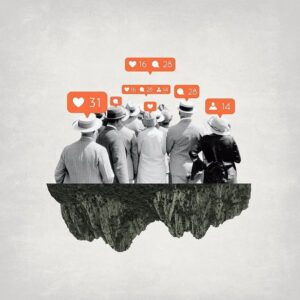
Explaining Cognitive Bias like an idiot
Okay, imagine your brain is a really fast, slightly lazy shortcut machine.It has to make thousands of decisions every single day. What to eat, who to trust, whether that person in the corner looks friendly or weird, is this a good deal or a bad one. If your brain stopped to carefully think through every single one of those decisions, you would be exhausted by 9am and you would have gotten nothing done.
So your brain cheats. It uses shortcuts. Little pre-made rules that help it decide things fast without using too much energy.
Most of the time, these shortcuts work fine. But sometimes they make your brain believe something that isn't quite true, or make you do something a little irrational, even when you think you're being totally logical.Those sneaky shortcuts that trick your brain? Those are called cognitive biases.The word "cognitive" just means "related to thinking." So a cognitive bias is basically a thinking mistake your brain makes on autopilot, usually without you even noticing.Here are the most important ones, explained like you're twelve.
Confirmation Bias
The one where you only hear what you already believe.
Imagine you think your football team is the best team in the world. Now every time they win, you remember it and tell everyone. Every time they lose, you say "oh the referee was bad" or "the other team got lucky" and forget about it quickly.You are collecting all the evidence that says "my team is great" and throwing away all the evidence that says "actually maybe not."That's confirmation bias. Your brain looks for information that confirms what it already thinks, and ignores or discounts information that challenges it.This is why two people can read the same news article and come away with completely opposite conclusions. Each one latched onto the bits that matched what they already believed.
The Bandwagon Effect
The one where you do something just because everyone else is doing it.
Remember when a particular shoe or a particular song was suddenly everywhere, and you wanted it too, not because you genuinely loved it, but because everyone had it?That's the bandwagon effect. Your brain thinks: "so many people can't be wrong, so I should probably go along."It's why trends exist. It's why certain restaurants have long queues even when the food is just okay. It's why stocks sometimes get wildly overvalued because everyone is buying and nobody wants to miss out.The brain confuses "popular" with "good." They are not the same thing.
The Anchoring Bias
The one where the first number you hear sticks in your brain and everything else gets compared to it.
A shopkeeper puts a jacket on sale. The tag says: ₹5,000 now only ₹2,500.You think: wow, fifty percent off, what a deal.But what if the jacket was never actually worth ₹5,000? What if the shopkeeper just wrote that number to make ₹2,500 feel like a bargain?That first number, ₹5,000, is the anchor. It got stuck in your brain, and now everything feels cheaper compared to it, even if ₹2,500 is still overpriced for the actual jacket.Anchoring is why negotiations always start with an extreme offer. Whoever puts a number on the table first pulls the whole conversation toward them.
The Sunk Cost Fallacy
The one where you keep doing something bad just because you already spent time or money on it.
You buy a movie ticket for ₹400. Twenty minutes in, the movie is terrible. You are bored and miserable.But you think: I already paid ₹400. I can't leave now. I'll waste the money.So you sit through two more hours of a bad movie, making yourself more miserable, to "save" the ₹400 that is already gone and is never coming back whether you stay or leave.This is the sunk cost fallacy. The money is already spent. It is a sunk cost. But your brain treats it like it still matters, and makes you throw good time after bad money.People stay in bad jobs, bad relationships, and bad situations for years because of this bias. "I've already put so much into this." The past investment doesn't change what the right decision is right now.
The Dunning-Kruger Effect
The one where the less you know, the more confident you feel.
Imagine you just learned to play three chords on a guitar. You feel amazing. You think you're basically a musician.Then you watch an actual professional guitarist play, and suddenly you realize how little you actually know, and you feel humbled.Then, years later, after actually getting good, you stop feeling so confident because you now understand how much more there still is to learn.The pattern looks like this: beginners are overconfident, because they don't know enough to know what they don't know. Experts are more careful and humble, because they can see the full mountain.The Dunning-Kruger effect is why people who have just discovered a topic sometimes argue the loudest and the most confidently about it.
Availability Bias
The one where things that are easy to remember feel more common or more dangerous than they actually are.
After watching a documentary about shark attacks, you feel afraid to swim in the ocean, even though the actual chance of being attacked by a shark is incredibly small, far smaller than the chance of something boring like slipping in your bathroom.But the shark attack is vivid, dramatic, and easy to remember. Your bathroom floor is not.Your brain judges how likely something is based on how easily it can imagine an example of it. Dramatic, recent, or emotional things are easy to remember, so they feel more common than they are.This is why people are more afraid of flying than driving, even though driving is statistically far more dangerous. A plane crash is dramatic and memorable. A car accident feels ordinary.
The Halo Effect
The one where being good at one thing makes your brain assume you're good at everything.
A very attractive person walks into a room. People around them immediately start assuming they are probably also smart, kind, and trustworthy, even though they have heard them say exactly one word, which was "hello."Or a brand makes one brilliant product, and suddenly everyone assumes everything else they make is probably brilliant too.The brain takes one positive trait and uses it to paint the whole picture. Like a glow spreading out from one bright spot and making everything around it look nicer than it might actually be.This works in reverse too. One bad thing can make everything else about a person seem worse, which is sometimes called the horn effect.
Recency Bias
The one where whatever just happened feels more important than everything that came before it.
Imagine a cricket player who has had a brilliant career for five years. Last week he had one terrible match. Suddenly everyone says he's finished, he's lost it, he should retire.The one recent bad match is sitting at the front of everyone's brain, feeling larger and more significant than five years of good performance.Recency bias makes recent events feel more representative of reality than they actually are. It's why investors panic-sell after a market dip even when the long-term trend is still healthy. The recent bad thing feels like the whole story.
The False Consensus Effect
The one where you assume everyone thinks the way you do.
You think pineapple on pizza is disgusting. Obviously. Who could possibly enjoy that?So you assume that most people agree with you. Your opinion feels like common sense, so it must be common.Except half the people you know actually like pineapple on pizza. You just assumed they didn't, because your own view felt so obviously correct that you projected it onto everyone else.The false consensus effect makes us overestimate how widely our own beliefs, tastes, and behaviors are shared. It's why people are sometimes genuinely shocked when a political candidate they thought was obviously terrible wins an election. Their social circle all agreed, so the whole world must, right?
Why Any of This Matters
Here's the thing about cognitive biases. Knowing about them doesn't make you immune to them. Your brain is still going to use these shortcuts, because that's what brains do, and a lot of the time the shortcuts are actually useful.But knowing they exist gives you a small pause button.
The next time you're absolutely certain about something, or you feel a strong pull toward a decision that doesn't quite make logical sense, you can ask yourself: which shortcut is my brain running right now?That pause is not nothing. It's the difference between thinking and just reacting. And in a world that is very deliberately designed to trigger your biases, from ads to news feeds to product pricing, knowing how your own brain works is one of the more useful things you can have in your corner.